Write an Open Invitation That Tells People Who May Come
An open invitation works best when it names who is welcome, what access means, and how to respond, so readers can decide whether the gathering is for them.

An open invitation is only as open as its wording. “Everyone welcome” can still leave people unsure whether children, neighbors from outside the block, first-time visitors, or people who cannot stay long are included.
Write the invitation around eligibility and access, not just arrival logistics. A reader should be able to tell who may attend, whether they need to sign up, and what limits apply before they decide to come.
Name the people the invitation includes
Broad phrases such as “the community” can mean different things to different readers. If the gathering is intended for anyone nearby, say “Residents of the neighborhood and anyone interested in local projects are welcome.” If membership is required, say that instead of calling the event open.
Be specific about groups whose inclusion might otherwise be uncertain. For example, state whether children may attend, whether guests may bring a support person, or whether people who are not members can observe. Avoid implying that someone is welcome when the format does not actually allow them to participate.
Say you are drafting an invitation for a neighborhood cleanup where volunteers may join for any part of the morning. You write “All neighbors and first-time volunteers are welcome; children may come with an adult, and no prior membership is needed.” Readers can now assess whether the invitation includes them without having to ask privately.
Explain what open access means in practice
“Open” can refer to several different arrangements: anyone may attend, anyone may watch, or anyone may take part in an activity. State which one applies. If visitors can listen but not vote, for instance, make that distinction clear before they arrive.
Registration, capacity, and materials can also shape access. If people must reserve a place, explain how to do so and whether walk-ins can attend if room remains. If no reservation is needed, say that plainly; a sign-up form should not appear to be a membership test.
Use a short, concrete description of any boundary. “The workshop is open to visitors, but tool use is limited to trained volunteers” tells readers more than a general claim that everyone can participate. If a restriction has a practical reason, explain it briefly without dressing it up as universal access.
Put eligibility before promotional language
Start with the event and who is invited, then explain the activity and the terms of participation. A reader should not have to work through several lines of cheerful copy to discover that the gathering is limited to current members or requires advance registration.
Include conditions that affect a decision: whether attendance is free or requires a contribution, whether guests may come for part of the event, and whether the group expects ongoing commitment. If an amount or commitment is not settled, do not imply certainty; identify whom to contact for the current details.
- If membership is not required, say “No membership required”; if it is required, name the membership condition and how a visitor can ask about joining.
- If children are welcome, state whether an adult must accompany them; if the activity is for adults, say so directly and suggest a contact for questions.
- If guests may bring someone, say who may accompany them; if attendance is limited to named participants, explain the limit and the route for requesting an exception.
- If registration is optional, say that walk-ins may attend; if it is required, give the registration method and what happens when places are full.
- If visitors may take part, describe the available activity; if they may only observe, state that boundary and identify any later opportunity to participate.
- If the event allows partial attendance, say when a person may join or leave; if arriving midway would disrupt the activity, identify the suitable arrival point instead.
Answer the questions readers use to decide?
Does “open to the public” mean anyone can attend?
Usually it signals that attendance is not limited to members, but it does not explain capacity, registration, age limits, or participation rights. State those conditions separately so readers do not have to interpret the phrase.
Should an invitation mention who is not included?
Yes, when a real boundary affects attendance or participation. Describe the limit neutrally, explain how a person can ask about alternatives, and avoid vague language that makes a restriction sound temporary when it is not.
How should a group invite people who are unsure they belong?
Name the relevant audience and remove unnecessary conditions, such as membership or prior experience, if those conditions do not apply. A direct line such as “You do not need to have attended before” answers a specific concern without making a sweeping promise about how every guest will feel.
What if the event has limited space?
Say whether people need to register, how the group handles a full event, and whether a waitlist or later session is available. Do not describe attendance as unrestricted if capacity controls who can enter.
Keep the welcome accurate as plans change
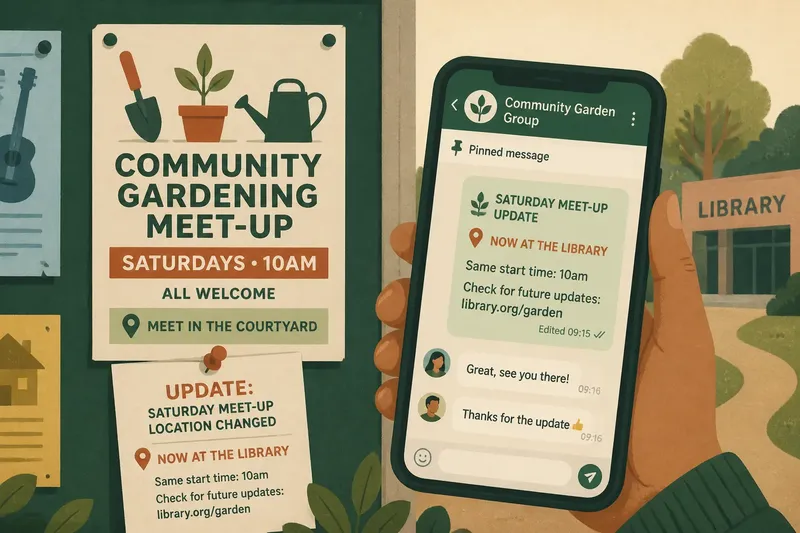
An invitation can become misleading when a venue, activity, or participation rule changes. Before sharing it, check that the stated audience, reservation instructions, and access conditions match the current plan; if any detail changes, update the same notice where readers are likely to find it.
For an open invitation, the central phrase should describe real access, not merely a friendly intention. Say who may attend, what they may do, and which conditions apply, then include the practical arrival information that helps them use that invitation. Clear wording gives potential guests a fair basis for deciding, while giving the group fewer avoidable questions to answer.